
"there are about 40 species"
500 article(s) found

Comparison of the stories of Coffee Bean Variety producing areas in the World the flavor and taste characteristics of Blue Mountain Coffee in Colombia, Brazil
Coffee beans are the seeds of coffee fruit that are processed, roasted, ground and brewed by the barista before they become the coffee we drink. Just like drinking wine, you are drinking the grapes used in making wine, in the same way, when you drink coffee, what you are drinking is the taste of coffee beans. Both

Why the coffee species in Ethiopia are all native species the historical reason for the word "native species"
When we talk about Ethiopian coffee, some people use words such as jasmine, rose fruit and magnolia to describe the smell of flowers, but have you ever wondered why these specific varieties with floral flavor are often summed up as "native species"? In the early days of the third wave of coffee, native species were often used to describe Ethiopian coffee, but this is not very accurate.

The Classification of Coffee beans: a Sociological Analysis of the reasons for Starbucks' success
Botanical classification of coffee beans: the circular zone at the tip of the north-south regression line, which we call Coffee Zone or Coffee Belt. Because the area is rich in rich organic matter and volcanic ash soil, the average temperature is about 20 degrees, the average annual rainfall is between 1000 and 2000mm, and there is no large temperature difference during the year, so it has become an ideal place for coffee production. Growing coffee is strict.

What is the most famous coffee variety in Ethiopia? a brief introduction to the type and flavor of Ethiopian coffee
Professional coffee knowledge exchange more coffee bean information please follow the coffee workshop (Wechat official account cafe_style) Qianjiaxiefi Red Cherry varieties, Ethiopian Coffee varieties introduction in the coffee industry, the term native species is applicable to varieties introduced in South America and Asia more than a century ago, as well as to many coffee varieties in Africa, especially coffee from Ethiopia

A brief introduction to the origin, development, history and culture of Columbia Huilan boutique coffee beans with soft taste.
The pure taste of Colombian coffee, in addition to the natural environment with the most favorable conditions for coffee growth, is inseparable from the hard work of local growers. In Colombia, coffee cultivation has reached 1.07 million hectares, there are about 302000 coffee plantations in the country, and 30 to 40 per cent of the rural population depends directly on coffee production. There are many farms in Colombia, but

The Soul of Andes on the Roof of the World-- the tomorrow Sun Project of Bolivia
[preface] We have new beans! After several rounds of cup testing and hand flushing, the curve of [Bolivia] was finally determined. What kind of beans is [Bolivia]? Bolivia is one of the poorest countries in Latin America, a landlocked country bordering Brazil and Colombia. Although it is a country with great potential for coffee export, its output is one.

Flavor characteristics of Sidamo Flower Kui soe Coffee Bean comparison of Sakura 3.0 4.05.0 and 6.0 Coffee Taste
Professional coffee knowledge exchange more coffee bean information please follow coffee workshop (Wechat official account cafe_style) Sakuran is the title of the top geisha in Edo period in Japan, unlike modern ones, Sakuran does not climb step by step according to the level of tourist girls, but chooses the daughters of fallen aristocrats or folk girls.

A brief introduction to the treatment method of grinding degree and baking degree of Colombian Huilan boutique coffee beans with strong aroma
The pure taste of Colombian coffee, in addition to the natural environment with the most favorable conditions for coffee growth, is inseparable from the hard work of local growers. In Colombia, coffee cultivation has reached 1.07 million hectares, there are about 302000 coffee plantations in the country, and 30 to 40 per cent of the rural population depends directly on coffee production. There are many farms in Colombia, but

Growth Environment and Flavor characteristics of Yunnan Coffee Variety-Kadim Catimor
Professional coffee knowledge exchange more coffee bean information please follow the coffee workshop (Wechat official account cafe_style) Katim (English name Catimor) Yunnan small grain coffee, Rubiaceae, coffee genus, mainly distributed in Lincang, Baoshan, Simao, Xishuangbanna, Dehong and other prefectures. Small grains of coffee are native to Ethiopia or Arabian Peninsula. Main producing area
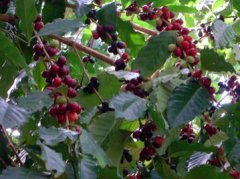
Basic knowledge of Coffee Coffee Tree Classification and growth picking period
Coffee tree belongs to the evergreen tree of Rubiaceae. Since ancient times, most of the plants of Rubiaceae are plants with special effects, such as quinine tree, which is regarded as a specific drug for malaria, and Dugan, which is used to treat amoeba dysentery. Coffee is defined as the most unique alkaloid drinking flora. The fruit of coffee consists of outer skin, pulp, endocarp, silver skin, and seeds (coffee beans) wrapped in the innermost layers mentioned above.

Starbucks Yega Xuefei Coffee Bean delicious Coffee beans Yega Xuefei Coffee Brewing Diagram
Professional coffee knowledge exchange more coffee bean information please follow the coffee workshop (Wechat official account cafe_style) Ethiopia is the largest Arabica producer in Africa, more than 2, 000 varieties under Arabica are all derived from Ethiopia's oldest Tibica variety after transplantation in Central and South America or Asia.

Share the story of Huang Wei, a famous Chinese coffee roaster.
As an imported product from the West, it is not easy for coffee to give birth to a coffee master in China. Our protagonist today is Huang Wei, who learned cocoa processing technology and coffee roasting equipment and production technology during his participation in the construction of a cocoa processing plant assisted by China in Ghana in Africa. After returning to China in 2001, due to work related to Chinese coffee growers in Yunnan, and so on.

Characteristics of coffee bean producing areas in Ethiopia the difference between Sidamo coffee beans and Yejasuffi coffee beans
For more information on coffee beans, please follow the Coffee Workshop (Wechat official account cafe_style) Coffee Bean / Guji Coffee in southern Ethiopia is adjacent to the Sidamo and Gedeo districts and lies across towering mountains, highlands, highlands, valleys and plains. Land in this area

Black coffee, black coffee.
When it comes to black coffee, the first reaction of many friends is bitter and astringent, or American coffee can be thought of. Indeed, American coffee seems to have become synonymous with black coffee. A few years ago, before the fine coffee market developed, the quality of coffee beans produced in the United States was average, resulting in bitter and astringent American coffee extracted without flavor. In recent years, with the fine coffee

Classification of plant taste of coffee tree
Coffee tree belongs to the evergreen trees of Rubiaceae family. Since ancient times, most plants of Rubiaceae family have special medicinal effects. Quinine tree, which is regarded as a special medicine for malaria, and Dugen, which treats amigo dysentery, are examples. Coffee is positioned as the most unique alkaloid drinking flora. The fruit of coffee is composed of outer skin, pulp, endocarp, silver skin, and seed which is wrapped in the innermost layer by the above layers.

Coffee beans have the same characteristics as those of coffee beans.
1. The seed coat of small fruit coffee has been removed, oval or oval in shape, 8-10mm in length, 5-7mm in diameter, 3-4mm in thickness in the middle, raised on the back, flat on the ventral surface, with slightly curved longitudinal groove and paper seed coat marks. Raw products are yellow or dark green; baked products are dark brown with special aroma and slightly bitter taste. Astringent. Coffee flower 2. Coffee seeds are slightly larger, ovoid, 9-11mm long and 7-7-in diameter.
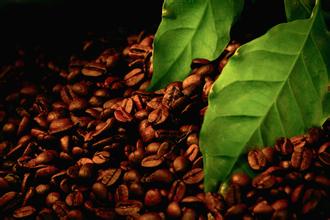
Coffee beans have the same characteristics as those of coffee beans.
1. The seed coat of small fruit coffee has been removed, oval or oval in shape, 8-10mm in length, 5-7mm in diameter, 3-4mm in thickness in the middle, raised on the back, flat on the ventral surface, with slightly curved longitudinal groove and paper seed coat marks. Raw products are yellow or dark green; baked products are dark brown with special aroma and slightly bitter taste. Astringent. Coffee flower 2. Coffee seeds are slightly larger, ovoid, 9-11mm long and 7-7-in diameter.

Yunnan fine coffee beans cultivation geographical location climate altitude profile
Planting areas are mainly distributed in Lincang, Baoshan, Simao, Xishuangbanna, Dehong and other prefectures. Baoshan has an average temperature of 21.5℃ and a maximum temperature of 40.4℃. There is basically no frost all year round. It is recognized as the best producing area of Arabica coffee. The Arabica coffee cultivated here is famous for its strong but not bitter, fragrant but not strong, well-proportioned grain facets, mellow fragrance and fruity flavor. International Coffee Organization tasting experts
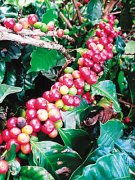
Classification of coffee trees
In recent years, coffee producing countries no longer blindly pursue high output while neglecting quality. Many countries have begun to introduce a new coffee evaluation system in order to arouse the enthusiasm of producers and promote the production of fine coffee. For example, Brazil began to implement the Cup of excellence coffee rating system in 1999 in order to better subdivide boutique coffee. And boutique coffee has become

Introduction of Coffee Grinding degree characteristics, Taste and Flavor description in Lazimus Manor, Colombia
Arabica species (scientific name Coffee Arabica) have to be mentioned in Colombian coffee species. Arabica coffee trees grow between 900m and 2000 m above sea level; they are hardy, and the suitable growth temperature is 1524 ℃; they need more humidity, and the annual rainfall is not less than 1500 ml. At the same time, they also require higher cultivation techniques and conditions. So now you can understand.